Saturday, March 8, 2008

No signs of hope yet for a better Afghanistan in 2008!


No more violence!
No more killings!
No more bloodshed!
No more unforgivable crimes!
No more suicide attacks!
We want security!
We want peace!
We want justice!
We want bread!

We want the government to protect us, are the cries that come out of throats of the many children, women, boys, girls, old and young who have lost a father, a brother, a mother, a sister, son or daughter in the recent suicide blasts in Kandahar, but where are the ears to hear their wailing?

We are sorry to hear this heart breaking news, and send condolences to the families of murdered innocents in these cruel suicide attacks. We condemn these cruel and bloodstained attacks. But even more, we regret that government officials do nothing for security. And then we feel regret for the Pashtoon leaders and politicians who have been continually supporting the Taliban, and now are being burned by their pact with devil.

The second big attack that took the lives of dozens of people in Kandahar on Sunday, February 17 happened during a dog fight that is a tribal pastime, especially among the Pashtoons of the south. In addition to the dead, news footage showed destroyed police vehicles. Why were police at a dog fight? It was revealed by a journalist in NOMA Website (Civil Movement of Afghanistan)that the fight was actually conducted by the of Kandahar police, and the dogs belonged to them.

Surely the attackers knew that the dog fight was conduced by the police and there would be many police officers in the area. Therefore they planned it precisely for that day, and killed many police officers. This was not reported by the spokesperson of The Ministry of Interior in his interview with the media, because the police and the ministry’s reputation and professionalism would be questioned.

This attack once again points out the real need and necessity for strength in Afghanistan’s security sectors, including the Ministry of Defense, Interior and the National Directorate of Security (national intelligence agency). This is not the first time such of lack of professionalism has been evident. Kabul’s five-star Serena Hotel, which hosts many foreign diplomats and VIPs was also attacked in mid-January and resulted in many casualties. This attack was also skillfully planned and executed, and shows continuing empowerment of the Taliban and their terrorist adherents.

While this was an alarm for Afghan security officials, it must have also alerted NATO and coalition forces to the need for real change in their training and support of Afghan security forces. While security is the major issue in Afghanistan, Afghan leaders and politicians ignore this fact. Instead they argue with each other about other internal issues.

The efforts of Pashtoon leaders to empower the Taliban raises the question: Why are they trying to take Afghanistan towards ethnic cleansing, or the re-Pashtoonization of Afghanistan? Isn’t this the root of Afghanistan’s quarrels and backwardness for centuries?

Clearly knowing that the terrorism doesn’t have borders, or true religious basis, or logic; that it doesn’t care about ethnicity or nation, still the government’s Pashtoon leaders plan their domination of the nation’s non-Pashtoons.
These efforts are seen through:
• the escape or release of Taliban commanders from prisons
• the appointment of a Taliban leader as a district administrator in Helmand
• ignoring or even cooperating with Taliban-fostered poppy cultivation

Afghanistan officially moving towards re-Pashtoonization process?

The issue of Parwiz Kambakhsh has not been resolved, but we are witnessing another violation of freedom of speech in Afghanistan right now. This is the punishment of a journalist for using nonPashto words in his Dari report.

Some people believe that ethnic discrimination will appear again soon. The latest series of ethnic brawls began with an episode of ethnic and language discrimination against a Dari speaking radio television reporter in Balkh province, who had used a non-Pashto word in his Dari reportage. This angered the Minister of Information and Culture who fined and fired the reporter as well as two other personnel of Balkh provincial radio-television. Instead of promoting anti-culture and anti-freedom of speech action, shouldn’t the government be concentrating on bigger issues like the failure of security , government inefficiency and corruption, financial disinvestment, and re-empowerment of the Taliban?

Sunday, February 17, 2008

Amin Wahidi's latest trip back to Kabul


Part 1


Wake up, wake up Amin! Opening my eyes, I cannot believe that I am in Kabul! I see Assad holding a handycam in one hand and shaking me with the other while laughing at me and recording all the moments while I wake up. He follows me to the toilet door, then when I come out and walk towards the sink to wash my hands and face he keeps recording and keeps saying,

“Hurry up, hurry up, we’re going out to see what’s happening in Kabul today and film it. It is too late, not good to sleep this late.”

Actually I stay up very late these nights, doing a lot of work; not specific work, but reading, writing and searching in the internet, the only things I am able to do. I have a quick breakfast and then we both go out. While telling me I have put chains on the tires, he gets into the car and drives it out of the gate. Then I close the gate, jump into the front seat beside him, and he takes off. Everything is white.

“Oh it has snowed lot!” he says, and I say yes, “it is good that next year we will have more water so our people will have a good harvest. It is almighty Allah’s mercy this year that there is enough snow so we can grow wheat and grain instead poppies. ”Assad laughs, “oh don’t start again.”

Assad wants to steer the car with one hand while recording with the other but I say “no, let’s talk about what we’ll film, and then we’ll have the whole day to do it.” I take the camera from him and turn it off.

******
The roads are very slippery and the brakes don’t work well. Assad enjoys driving fast, as always, which I don’t let him do now, when it is so dangerous with so many people walking on the narrow roads of Dasht e Barchi. Some carry snow-shovels to sell. Some have bought them and shout, “Snow shoveling, snow shoveling!”

We see children playing in the snow, and throwing snow balls; some children make a snowman. What nice scenery there is when it snows; the trees are covered as if they are wearing white suits, and anything, even a small thing on the snow is visible like a black spot on a white sheet. Assad and I recorded all we saw. At my insistence, we reach Masoud’s house. He is a colleague of mine from the Ariana TV Network, and my classmate in Kabul University’s Fine Arts School. We will take him with us and head to the center of town. Oh, I forgot to introduce Assad. He is my mother’s brother; one year older than me and my best friend.

Assad parks the car on the street and records with the camera. I knock on the gate of Masoud’s house and hear a voice-- “who is it?” Soon Masoud’s young sister comes to the gate and says Masoud is still sleeping, Assad still records as we enter and go directly towards Masoud’s bedroom. I pick up a glass of water and pour some on his sleepy face. He jumps up, shouting oh! What is it? Who is this?! Then while Assad is still recording we both burst out laughing. Masoud’s sister laughs with us.

Masoud quickly gets out of bed and washes his face, and without having breakfast he joins us as planned. The three of us get into the car and while Assad drives, I take the camera and start recording. The sharp white light that snow reflects teases my eyes, and I am not wearing glasses either but still I am willing to do it. Rewinding the recorded video I ask Assad, “what have you recorded? Unprofessional! Totally unprofessional!” Masoud tells me, ok, now you record professionally.

I try not to keep recording everything like Assad did, and my eyes look for something special-- special images that give me and the others a sense, a meaning, and a feeling!

I begin to see new and more serious images through the view finder. Sometimes I wish I were not a filmmaker so that I would not focus on some of the things I see around me. Here is a poor porter, pulling a cart with a heavy load of wood, dripping with sweat, and there is no one to help him out and push cart from the rear. I tell Assad to park the car on a side and they two get out to help the poor cart- puller. I keep recording the scene.

A car is parked on the other side of the road and it won’t start. According to Assad, the driver looks very jealous that we could start our car. Many people stand in the snow, waiting for a bus. A handicapped man is walking with the help of crutches in the heavy snow. On the other side of the road, I tell Assad to drive more slowly, so that I can tape all that I see. Masoud keeps shouting, oh look at that! Look here! Look there! He just confuses me and I am not sure what really I have to record from this big world with this small handycam.

Further along, we see a crowd. A big truck is parked on the other side of the road where there is a little more space. Many people surround it, and while they make a lot of noise, we are not sure what they are talking about. We see men pulling sacks out of the truck and others taking them with wheelbarrows. The snow is black and the people carrying the sacks are dirty. Oh, now we realize that it is coal for heating, and people are buying it, as we ourselves used to do.

We record these moments, then move on slowly. We see a middle-aged woman carrying a basket on her head full of loaves of Naan e Garm (the hot Afghan bread) which leaves a delicious smell in the air.


Part 2
As we reach Chauk e Shahed Mazari (Shahed Mazari Square) in Pol e Sokhta, we see there are more crowds; we see beggars coming up to the cars, asking for money.

Bicycles and Zaranj Rickshaws pass by and traffic jams the square. On one side there are carts parked and selling fruit and vegetables. On the other side, where the bus stops for Dasht e Barchi, we see people selling things from small stools: bananas, shor nakhod (Special Afghan peas), garam lablabo (hot beets) and peanuts. It is noisy as car and bus horns sound. We see a group of boys walking and two of them fall down slipping on banana peels, every one laughs at them.

As we move towards Kot e Sangi, our ears still hear the voices of vendors and fruit sellers yelling: ( Ala Garam, garam shor nakhod, alla kella bobaren kella! Khal dar kella! Maza dar kella! Lablabo! Garm o dagh, sherin o shaker lablabo bobarin ke khalas shod)…

We cross Pol e Sokhta and see the new additional bridge, that has been under construction for almost a year, is still not completed. We are now between Golaye Dawakhana and Kote Sangi where we see other crowds of people. There are many hotels, restaurants, and dormitories in this area for the people who come from or who want to go towards Hazarajat.

People sit near the hotel doors and some walk around the hotels and restaurants but none seem to understand it’s winter, since they are not wearing warm jackets, coats or hats. I wonder why. I tell Assad to park the car so we can go film these strangely dressed people. We get out of the car and move toward them. Assad says “Salam qauma!” the traditional greeting.

“Walekom Salam,”one of them answers, and I keep recording as Masoud stands beside me watching the LCD screen of the camera. I ask the man if it is okay to film him. He smiles at first and says nothing, but he answers,

“Yes, take my picture. The others took my life. Now you take my picture. This is the only thing I can give to you, yes record me, take my picture. But show it to the world, show it to people and ask them if this is Islam and Brotherhood? Is this human care for refugees? Amadinejaad has taken my everything. Just my breath and nothing else is left for me!”

His anger confuses me and I think he might be insane or crazy but still I record.

“You see I have nothing to wear for this cold winter?” the man continues. “Do you think I am crazy? Or I am giving a fashion show with these summer clothes?” I now realized what he meant.

“We were deported by force from Iran. My family was deported, but I don’t know where they are now or if they have winter clothes, because I was at work when the Iranian police arrested and deported me. While my family members were looking for me, they were all, men and women, deported. I am not sure where they are. Record me and show it on all the channels of the world, Show it on BBC, on Tolo Television on Aljazeera!

The man continued, “Show it to Ahmadineejad, show it to the government of Iran who claim to be Muslims! Where is it written in Islam to deport refugees in the heavy snow of the cold winter?!” Hearing his voice the other deportees also come nearer and joined him.

One says,“Tell me who is responsible?”

Another says, “Yes record us and show it to Hamid Karzai, show it to Wazir e Kharija and Wazir e Mohajerin!” (Ministers of Foreign Affairs and Refugees Affairs).As it gets more crowded it is more difficult to control the small handycam and I try to get more distance between them and myself. From a further away, an old man yells, “Marg bar Ahmadinejaad!” And the others repeat it, “Marg bar Ahmadinejat! Marg bar Ahmadinejaad!”

We see women and children, also deported, also knowing nothing about their fathers and brothers, and husbands. Some children cry, some play. One women, while carrying her sleeping child, cries that the child is very sick and she doesn’t have either money or medicine. No one hears her voice, but she shows me the face of the child and tells me to record it, to show it to Masoolin e Daulati (the governmental officials) and asks,why we are like this? “If my child dies, Ahmadinejaad and Karzai are responsible,” she says.

After this last scene, I am about cry, I want to shout, I want to yell and wail, “Why are our people are like this? How long will they suffer?” I am almost losing control as Masoud takes the camera from me and Assad tells me to go towards the car. While getting into the car, we are still hear the people shouting, “Murda bad Ahmadinijad, marg bar Iran! Ahmadinejat musulamaan nest! ”

These scenes really made us sad so that we wanted to end our trip. We drove back home, wondering how we could help these people. The only thing I can do for them is to write about them, and through that, maybe others could hear their voices. This day, the three of us decide not to sleep long hours anymore, but to wake up early every morning and do lots of work because our land still needs a lot of work to be done, and we must do our share.


******
Eventually, I sigh and open my eyes, and find myself still on my bed in the room where I sleep in Milan Italy. I wondered if this was only a dream, and look around like a crazy person. I see nothing at all of what I told to you, as if every thing was blown away by the wind or I told you lies. Was it a dream, an illusion, a daydream, or a very close hearted - relationship with my dearest ones back in Afghanistan? It must be that, because I miss Assad and Masoud a lot, as I miss my other family members and friends.

So, I only imagined all these things. I was up very late the night before, reading about the heavy snows in Afghanistan, that have caused so many problems for people in rural areas. Many sick children died, because they did not have access to doctors. Also, a few days ago I heard that Afghans had been deported from Iran in the winter cold, when costs of food and heating fuel are getting higher day by day in Afghanistan. This was my latest trip to Kabul, an imaginary trip back to my Kabul.

Written by Amin Wahidi
Edited by Robert Maier


-First three photos by Fardin Waezi
-Last photo from China Press

Saturday, February 16, 2008

Statement regarding Parwiz Kambakhsh from the Afghan Cultural and Social Association in Italy

Cultural and Social Association of Afghans in Italy
Headquarters

On behalf of the Cultural and Social Association of Afghans in Italy I would like to express solidarity and closeness to Sayed Perwiz Kambakhsh, the young student journalist who was accused of blasphemy.
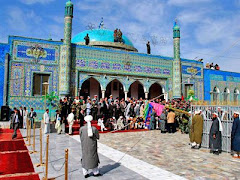
Convinced, as we are, of the fundamental role of information and media in the process of reconstruction and stabilization of Afghanistan, and in the social and cultural development of the country, we want to join the international community in launching appeals for reviewing the death sentence.
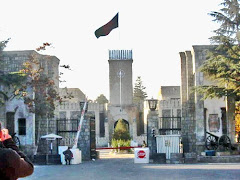
Though with due respect to the Afghan justice system, we reckon that the trial was not conducted in accordance with the Constitution, which provides the presence of a counsel for the defence and that the case has to be tried in open court.

Pending the review of the sentence, we moreover demand Sayed Perwiz Kambakhsh to be granted probation.

The access to quality information is fundamental to take part in the social and political life of the country, essential for the development of democracy.

Please forward

Rome, 1st February 2008


Italian Version
A
nome dell’Associazione Cluturale degli Afghani in Italia desidero esprimere vicinanza e solidarietà nei confronti di Sayed Perwiz Kambaksh, il giovane studente di giornalismo accusato di blasfemia.

Convinti del ruolo fondamentale dell’informazione e dei media nel processo di ricostruzione e stabilizzazione dell’Afghanistan, e nello sviluppo sociale e culturale del Paese, ci uniamo agli appelli della comunità internazionale per una revisione della sentenza di condanna a morte.

Pur nel rispetto del lavoro svolto della Magistratura afgana, riteniamo infatti che il processo non sia stato svolto secondo quanto previsto dalla costituzione, che prevede la presenza di un avvocato difensore e lo svolgimento del processo a porte aperte.

In attesa di una revisione della sentenza, chiediamo inoltre che a Sayed Perwiz Kambaksh venga concessa la libertà vigilata. L’accesso a un’informazione di qualità è fondamentale per partecipazione alla vita sociale e politica del apese, fondamentale per lo sviluppo della democrazia.
Con preghiera di diffusione


Roma lì 01/02/2008
Qorbanali Esmaeli
Presidente di ACAFI

Monday, January 21, 2008

Why are the Mullahs afraid?


Hearing about the illegal detention, torture, and death sentence for blasphemy of Afghan journalist Parwiz Kasbakhsh by Mullahs in Mazar e Sharif of Balkh province in the north of Afghanistan, for an article discussing the treatment of women in the Holy Quran, I would like to comment.

First, why are these fundamentalists afraid of opinions, ideas, and discussions regarding religion?
A short review on the role of the Mullahs in the lives conservative Afghan society provides an answer.

Throughout the history of Afghanistan, Mullahs have proven to be a free-fed, luxury-loving and powerful people. They rule over a large illiterate, superstitious, ignorant segment of the population, and have done so for decades or even centuries.

It is obvious for almost every Afghan that Mullahs have always been the richest people. They do no hard physical labour. They misuse the wealth of people in the name of religion, the Prophet, and the Holy book.

Their power came by targeting the poorest groups, like farmers, poor labourers, and other low- income, uneducated people. These groups were satisfied just with something to eat on a daily basis-- and thanked God for that. Not knowing there were ways to achieve progress and improve their lives, they were content when the Mullah was content with them. They were also afraid of the curse of Allah, which the Mullah threatened would come, if they were disobedient to him. Their rule continued because there was no knowledge, except what the Mullah commanded, and no one dared say anything different. It is the same today.

To keep people ignorant and illiterate, the Mullahs forbid schooling. Mullahs forbid religious questions and discussion, because they are afraid of losing their power and wealth, gained from their religion, which is in reality the business of ruling over poor, illiterate and superstitious people.

During the monarchy, they discouraged people attending school by defaming the monarchical system. Later, they prohibited people attending schools by saying they were godless communist training centres. People thanked Allah that they did not become communist when they did not know the meaning of the word.

When the immigration and displacement of people from villages to towns and cities began in the late 1980s, the Mullahs tended to lose their power. In the cities, people went to schools where they had the opportunity to learn more than what the Mullahs told them. In the 1990s, in the chaos of civil war, the fighting parties were led mostly by Mullahs. Then people realized Mullahs stood for only power and wealth. They began to see the misbehaviour of Mullahs, so the mistrust and even hatred of Mullahs grew day by day. A very popular expression says: “Do what a Mullah Says but do not do what a Mullah Does!”

Now, if you ask even a young boy or a teenager about Mullahs, he can explain that a Mullah is different in reality, from what he tries to appear to be.


The new Mullaism?

This word may not exist, or better to say I made it up, after observing the situation in countries where fundamentalism is taking root again.

The recent tragedies in Pakistan, the re-empowerment of Mullaism and fundamentalism in Afghanistan, and the Mullaism in Iran show that the Mullahs are a larger force with greater purposes and bigger deals and incomes than a simple religion should have. It is unclear if they carry out their sinister plans by themselves, or if they are puppets played by others in the game of global politics. This must be considered, because Mullahs were well-used in the cold war of the 1970s- 1990s. The Americans and Saudis among others, financed them with billions of dollars in the battle against the USSR.

If you ask an Afghan what would happen if there were no fundamentalists?! The answer would be; “The world and especially Afghanistan would have been more peaceful and prosperous.

The fundamentalists have their own followers produced in Taliban Factories called Madrassas in southern Afghanistan and northeastern Pakistan. They know nothing logically about Islam, they only follow their feeding leaders blindly, because most of them belong to poor families who have only chosen Madrassas as a way to feed their desperate families.

Most intellectuals in Afghanistan believe that Islam has existed for fourteen centuries with a good reputation, but the contemporary Muslim puppets (The Taliban) have demonstrated that their Islam is not the Islam of the Holy Quran. Islam will exist with or without the fundamentalists, but how nice it will be when all fundamentalists understand the truth and reality of Islam. This is possible but it needs time and effort and much sacrifice, and only if journalists and intellectuals like brave Parwiz Kambakh continue to reveal and discuss these issues.

Wednesday, January 2, 2008

A review of "The Kite Runner" movie


“The Kite Runner” was the first book I read about Afghanistan, before I spent five weeks in Kabul in the summer of 2004. I raced through it, because I generally prefer non-fiction to fiction. The plot depends on a big secret revealed at the end, and that’s just not my cup of tea. To me, the suspense of reading unfolding history seems more honest than a formula melodrama. But the setting of Afghanistan from the hey-days of the 1970s to the Talibs was unique and relevant, especially post-9/11 when interest in Afghanistan mushroomed. “The Kite Runner” pushed a lot of buttons-- children, conflict, tragedy, redemption, epiphany-- and it charmed millions of readers. It was right out of the headlines, had a huge audience of book clubs, college summer reading lists, and a firm slot on the N.Y. Times bestseller list.

Not being a huge fan of the book, I still really enjoyed the movie, even though sometimes I found it disappointing, maybe because of my “insider’s” view of life in Afghanistan. Though filmed in China, the film’s art departments should be congratulated for imitating many obscure, minute, and accurate details of Kabul street life. The wardrobe and makeup are incredibly realistic, and the packed street scenes approach a travelogue’s reality. The acting and music are generally professional, with many moving high points. The screenplay is as faithful to the book as any movie can be, having to reduce an 8-10 hour story to two.

However, if you haven’t read the book, read it first and then see the movie—it probably will make the plot clearer. And don’t wait for the DVD—see it on a big screen, where the power of the visual feast will be the greatest.

The movie seems to try too hard. Instead of letting the story unfold, the director is a little heavy-handed, trying to cloak the tragedy in a more morose mood than necessary. Everything is dark and brown—clothes, buildings, furniture, books, rugs, vehicles, and actors’ moods. The skies are always cloudy; the air always tinged in ochre. The story rolls out like a familiar dark ritual—another reviewer, unkindly, called it robotic.

The film’s lighting is dull and unimaginative with little range, contrast or depth. The same can be said for most of the by-the-book direction: the camera remains planted in most scenes, cutting from wide shot to close-up to reaction shot, creating a claustrophobic 1940’s-50’s early TV feel. The lead character, Amir, seems more like a metaphor for abject depression than a person. All of this is obviously purposeful, and achieves a unified theme, but an occasional inconsistency would have made it more real.

The extended scenes of the flying kites, which are bright, sassy and full of energy, are the only exception (nudge, nudge) to the dull and dusty atmosphere of a mono-chromatic, single-emotion, two-dimensional culture.

This contrasts with the Afghanistan I know, with its riot of colors in its rugs, paintings, trucks, gardens, architecture, mosques, wedding fests, bazaars, lively conversations and jangly music. The sun nearly always shines in Kabul’s electric blue sky, and the snow-capped mountains create a constantly shifting perspective and depth. The Afghans are quick to smile and laugh and act with grace, warmth, and passion in most situations.

Despite these criticisms (I’d rather call them quirks), the film held my interest firmly throughout its nearly two-hour length, and is an enjoyable, moving must-see for anyone with the slightest interest in Afghanistan.

The most controversial aspects of the film have little to do with the plot, and more to do with current political conditions in Afghanistan. Many believe that the script’s few insults to the Hazara ethnicity would spark riots, if the film were shown in Afghanistan.

Also, some felt that the story’s pivotal sexual assault, which is actually vaguely presented in the movie, would cause a violent reaction. Although political extremists will gladly make a mountain out of any molehill, I don’t think the average Afghan would have a problem with either. They would probably be more upset that they are portrayed as so morose.

But the potential for conflict fuels the controversy-hungry media. Most Afghans will see the movie on pirated DVDs before the movie is a month old, and if you haven’t heard any problems by now, then there probably will be none. Right now, Afghanistan faces much more serious problems from the growing number of nutcases who think the Taliban are a positive force in Afghan culture.

I did respect the honesty displayed in that the U.S. is not portrayed as a paradise for immigrants, where money grows on trees. The gray jumble of Freemont, California’s run-down suburbia and swap-meet culture, and Amir’s proud father’s descent to a crummy convenience store clerk job reflect Kabul’s wartime cheerlessness and sense of loss.

At the end, I was saddened that the negativity and gloom of the evil characters, and the director’s quirky “all the leaves are brown” take on everything would leave a distaste for Afghan society and culture, especially considering that the happy, pastoral finale occurs only after the characters’ escape to America. There is so much more to Afghan culture and history than this sad, somewhat contrived story, which could have happened anywhere. It would be a shame if the millions of people who watch this big movie, will at the end sigh in relief that they don’t have to live on that side of the world.

However, after the movie, I spoke with the lady sitting next to me, who had just read the book, and loved the movie. When I told her I’d spent some time in Kabul, she replied, “Oh, I’d love to go there!” Didn’t it seem to be too grim and dangerous and mean? “Not at all, it was fascinating,” she said. “Well then you should go, don’t be afraid of it,” I said with a relieved smile.

“The Kite Runner” is a good first step, that will open a window. I look forward to the quintessential Afghan production on the level of “Dr. Zhivago” or “Lawrence of Arabia” filmed on Afghan soil.

One final note,; the movie theater was packed at the 4:30 pm New Year’s Day show in Charlotte, NC, where “The Kite Runner” is on two screens. It’s being treated as a borderline “art film,” as it probably should be, due to its talkiness and general lack of extensive sex, violence, drugs, and guns that are the hallmarks of Hollywood. Most critics are lukewarm, but the built-in audience of those who read the book are making a respectable box office draw. The movie should be around for a while and be a moving experience for most. Don’t miss it.

--Robert Maier

Sunday, December 23, 2007

Merry Christmas to those far away from their loved ones

Merry Christmas – Buon Natale

Eid ul Addha ( The Feast of Sacrifice) one of the biggest feasts for the Muslims came and passed while I am apart from my family, home, friends and I felt how difficult it is to be far from family and miss them on such an important occasion.

When I couldn't say happy eid to my family and friends face to face, now I would like to take the chance of saying merry Christmas to those people from foreign lands who serve in my country and are far from their families at Christmas and the new year occasion.

Merry Christmas to you all, who are reading my blog right now.

And merry Christmas to you who is now far from his home, family and relatives but serving for peace, rebuilding and democracy in my country Afghanistan though missing your dearest ones back in your country in this important occasion, now being far from home, I can feel you very well.

Merry Christmas to you all, who serve in the cold, mountainous and snowy central highlands of my country to keep peace and security for my people, al though you miss your family, country and friends in this occasions that only comes once a year.

Merry Christmas to you all who serve in the windy, dusty and dangerous deserts of Helmand and other south western provinces of my country to keep peace for my people although any moment could be of death or life for you.

Merry Christmas to you all who serve and patrol in the streets of Kabul, where any moment you could expect a bomb blast and could lose your life for peace, freedom and democracy for my people.

And merry Christmas to all civilian and military who serve for peace, security, freedom and democracy in different corners of Afghanistan.

May God bless you all and you will begin the new year with hopes and full of peace, security, happiness for you and for the people of Afghanistan.


Mohammad Amin Wahidi
Exiled writer, journalist and filmmaker from Afghanistan

Saturday, December 22, 2007

An Afghan/Hazara's thoughts on "The Kite Runner"


Finally "The Kite Runner" has been released in the USA after a delay from it’s original date in November. I just feel sorry I will not to be able to watch it right away, since it will be released later in Italy, where I am now. I am not writing as a critic or to comment about the film, since I haven't watched it yet, but like millions of other readers of the novel and especially as a Hazara, like of one of the main characters, I would like to raise some points about it.

For me first as a young Afghan filmmaker who has a long way ahead to make films and then as a person who has seen all this racial and ethnic discrimination, war, oppression and ethnic conflicts with his own eyes in his country, it is very good to see how a novel can change the image of a country.

So much of what has been depicted of Afghanistan in the minds of people especially in the West, is a picture of ruins with aggressive inhabitant. When Afghanistan is considered, some people think of terror, Taliban, drugs, bombings and all harshness. Then when we explain to them more about what Afghanistan is really like, they pretend that now they have a clearer image of Afghanistan. But we know they are still doubtful because hearing something is never like seeing something with your own eyes or reading something strong. Based on this point, I believe cinema and literature can play an effective role in depicting the reality and distinguishing it from the rumors or wrong imaginings.


The “Kite Runner” a brief history of three decades of Afghanistan


Reading "The Kite Runner," I really felt very close to the characters, since I as a Hazara Afghan, know what is my country like, who are the ethnics, what are their traditions, how is the social lives of people, what happened to my country in the 1980s, and 1990s, and all that has occurred since the fall of the Taliban. Reading the Kite runner I could imagine what is happening, because it is written so well.

The ethnic discrimination visualized in this book is a part of our history, which is even worse, in reality, than any novelist can imagine.


Regarding the film:

It has been a trend to make films of best-seller novels for a long time. Usually these films have been successful. Since I haven't been able to watch the film yet, I will ask my friend Mr. Robert Maier who lives in the USA and must have watched it by now, to write his comments on the film, since he has been in the industry for years, and knows Afghanistan and Afghans well. I will then post it here.

I will write here mainly on how this film is similar to or different from others made in or about Afghanistan in recent years.

In the 1980s two filmmakers were interested in Afghanistan as themes of their films: Peter Macdonald who made “Rambo 3” in 1988, and Kevin Reynolds who made "The Beast of War” in 1988. Both are the result of interest in Afghanistan because of the cold war while John Frankenheimer made his historical film “The Horsemen” in Afghanistan in 1971.

This trend has increased two decades later, after the prohibition on films and filmmaking ended with the ouster of the Taliban in 2002.

During the Taliban time some films were made in Afghanistan and some were produced on the borders of Afghanistan with Afghan themes. "Trip to Kandahar" was made by Mohsin Makhmalbaf the Iranian filmmaker in Iran border of Afghanistan in 2001 and " In This World" was made in 2002 by Michael Winterbottom in the Afghan refuge camps in Peshawar Pakistan. The latest one out of Afghanistan but about Afghanistan is "The Kite runner" by Marc Forster. (Editor’s note: “Charlie Wilson’s War” is currently in release, and other Western-produced films with Afghan subjects will be released in 2008.)

Other foreign feature and television films that where made inside Afghanistan after the fall of the Taliban government such as:

"I Love Peace" by Yutaka Osawa, the Japanese Director in 2002,
"Five In The Afternoon" by Samira Makhmalbaaf the Iranian female director in 2003,
"Earth and Ashes" by Atiq Rahimi the Afghan French novelist* and Director in 2004
"Soldier Star" by Christoph Dopamphiele the French Director in 2005 ( who then later suicide himself and was dead)
"Spring of Hope" by Hashmat khan the Afghan Indian Director/ Actor in 2006 and
"Kabul Express" by Kabir Khan the Indian Director in 2006

Of these films, some are similar to "The Kite Runner" in theme and content or composition of main crew. For instance not the content but the project of "Earth and Ashes" are similar to "The Kite Runner" because it is also adapted from a best seller Afghan Novel which was written by Atiq Rahimi in the French language and was then adapted into a screenplay by Kambuzia Partovi the Iranian director and screenwriter, and then was directed by the author and a French crew.


The form of "Spring of Hope" that is written and directed by Hashmat Khan Rahimi the Afghan Indian Director/ Actor in 2006 with an Indian crew is similar to "The Kite Runner" because it depicts the history of three decades of war and the changing of regimes. The difference is that he has focused on the lives of two lovers in Kabul University, and quarrels of the Mujahedin and then Taliban and so on. But "The Kite Runner" explores a bit more in depth the bottom layers of society and explains more about the ethnic conflicts and discrimination, and especially Pashtun oppression of the Hazaras.

The third one that is a bit similar with "The Kite Runner" according to its content and generating of controversy is "Kabul Express," made in 2006. It was very controversial in Afghanistan this year and was finally banned by the Ministry of Information and Culture of Afghanistan after there were many objections by the people against it.

This film was written and directed by the Indian Director Kabir Khan in cooperation with Afghan Films Department and another local Afghan film production company.

The plot of this film is the story of two Indian journalists who were kidnapped by Pakistani Taliban when the Taliban were escaping under attack of the American and coalition forces. But at the same time this film had some scenes un-related to the content of the film and considered to be insulting to the Hazaras of Afghanistan without a reason. Therefore many Hazaras including their leaders, whether inside or outside of Afghanistan opposed this film and showed their objections with demonstrations, gatherings and other forms of objections. These actions finally caused this film to be banned in Afghanistan by the Ministry of Information and Culture.


My words to Hazara youth


And now again there is fear that the Hazaras may “The Kite Runner” film too since they have been communicating about this issue with each other.

Although there are some Hazara youth who are preparing to oppose this film, I believe this book and this film are like an apology for the oppression of one generation to another, in the form of a story.

I believe the Hazaras are portrayed to be poor, under pressure, and the underdog, and though they were treated badly during the 1970s and then late 1990s they were actually sincere, loyal, honest and brave.

I believe one reason that made "The Kite Runner" a best seller first in the USA and then throughout the world was the way the author depicted the circumstances and characters in his novel and the way he has revealed some of the truths which have not been told or written elsewhere.

Indeed the author has entered into the souls of the characters and without bias or taking either side and created a realistic and believable environment, which may have been inspired by and mixed with some of his own childhood memories and experiences that depict at least part of three decades of history of Afghanistan very clearly.

Therefore I suggest that Hazara youth,not oppose the film but instead watch it and then try to make another artistic work that they think would depict a better image of the contemporary Hazara ethnic and society or at least to write a reasonable comment or critique about "The Kite Runner."

I think what is not written in the history will need people like Khaled Husseini to communicate, whether in the form of novel or in another literary form just to point out and remind people about it, because the sun is never covered with two fingers.

I think it is better to let the world know that there was a Hazara boy named Hassan and there was a Pashtoon boy named Amir once in Afghanistan and let them judge who was right and who was wrong in the game of life and what were the causes and reasons for it.

Although a Hazara woman is raped, a Hazara boy is raped in the street in front of many people, and a Hazara orphan is taken as a hostage to dance for the Taliban in this novel, on the other hand, how oppressive some of Pashtoon were, how cruel the Taliban were, and how people behaved with Hazaras were depicted with reasons and I am sure a person who had lived in Afghanistan during the 1960s and 1970s and the late 1990s must have seen have seen with their own eyes. Therefore don't you think, there were even worse things and more cruelty against the Hazaras throughout the history but no one has written them yet?!

It is very important for me when a book and or a film can draw the attention of the world towards a country.

Nowadays once again Afghanistan will be under the focus of the world after the release of the film, as it has been a forgotten country after the war of Iraq in 2003.

I believe "The Kite Runner" is a masterpiece and a tremendous achievement since this book was famous worldwide and was translated into dozens of languages around the world.

I have seen the effect it has left on the foreigners in different corners of the world. For instance, as I have experienced since then any time I met a new foreigner and the soon he or she knew that I was Afghan, the second question from me was " Are you from the ethnic background of Amir or Hassan?"

For me that is a great achievement of the author to create such characters in his novel to remain in the minds of people.

I would send my congratulations to Khaled Husseini, the author of the novel, David Benioff the screenplay writer and to Marc Forster the director of the film through this piece of writing.

I think Afghanistan still needs some time to be able to digest and absorb such films and
I am concerned about the lives of Afghan child actors who played the childhood roles of Hassan and Amir and glad they are brought to the UAE to be safer there.

My last words

Seeing the world wide achievements of "The Kite Runner" I am more committed to do my best to depict the true and real images of my country by my films on which I am working day and night, to change the unrealistic images and wrong visions of my country in the minds of people in the West.

Sometimes I just think of six years back when Mullah Omar also got world-wide fame for Afghanistan for drugs, terror, bombings, destruction and killing. Then when I hear about Khaled Hussieni and his novel, I feel more confident that a person can change the world if he wants, he can enter the hearts of people and can bring a positive name and reputation for his native country, and depict a true picture of his homeland and people.