Wednesday, March 19, 2008

Happy New Year 1387 to all Afghans around the world

The blooms blossom on the trees, the deserts are covered with red tulips, nightingales sing in the gardens, swallows fly in the sky and dip down towards the earth to share the feeling they have of spring with the children who play happily or fly kites under the slight drops of spring rain. The snows have already melted and ants are visible everywhere on the earth, beginning to work while delivering the message of arrival of a new season, and a new beginning is visible from many signs.


NOWROZ is on the way, NOWROZ that means THE NEW DAY that is being celebrated continuously for centuries in this land.

Through the radio or televisions, almost everywhere is heard:

“Bia ke borem ba Mazar Mula Mamad Jan, Sayl e gul e lala zaar wa wa dilbar Jan”

Children or adults, young or elderly sing this song during these days.

“Let’s go the Mazar Mullah Mohammad Jan to see the tulips of the northern land oh my darling!”


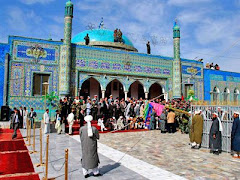
Of course Mazar e Sharif the capital of the northern land, and the home town of the great poet Rumi, is the main city for the celebration of the New Year Fest. Every year at this time, hundreds of thousands of people come to Mazar from different corners of the country, if there is enough security between the cities.. They want to pass the New Year days in this holy city that is believed to host the shrine of Imam Ali, the Shiite’s first Imam and the Sunni’s fourth Caliph who is the only junction point in between the Shiites and Sunni Muslims of Afghanistan.

And of course as said by the people, Mazar is very beautiful in this season, more beautiful than any other seasons of the year; it is beautiful because there are a lot of tulips in the deserts around the city. It is beautiful because many people from different ethnic backgrounds, of different colors and different provinces get together there to raise the flag of the shrine that is called “JANDA BALAA.” They hug each other very sincerely and friendly and forget any kind of animosity and argument they had during the past year, and commit to begin a new year with new plans.

The shrine of Imam Ali in Mazar e Sharif is the shining jewel of the town. The presence of hundreds of white pigeons in this shrine makes it nicer and presence of people at Nowroz make it the nicest.

We should not forget that after Mazar e Sharif, Kabul is the second biggest place for the “JANDA BALA” celebration of NOWROZ. The SAKHI Pilgrimage in the west of Kabul is also believed to be the passage place of Imam Ali and is located mid-way up Asmayee Mountain. On NOROWZ thousands of people gather there to raise the flag of this religious place and celebrate the New Year that is the beginning of the spring.

Let’s not forget about the HAFT SEEN, that means SEVEN and is seven things usually food (fruits or vegetables) that begins with the letter S on the dining table or dining mat on New Years Day. It is also a very important tradition among the Afghans in the Afghan New Year’s Fest.

******

While every one is happy and cheering in fine new clothes on New Year’s Day, I wish I would been able to be there among those white pigeons of Mazar e Sharif and among my family members, friends and my people in this important feast, but I can’t.

The only thing I can do is to say Happy New Year from the core of my heart, to my family members, friends, and all homeland fellows. And to pray for them and for peace in my country so that the year 1387 will be full of prosperity and happiness for everyone in my country, Afghanistan.

HAR ROZ E TAAN NAWROZ NAWROZ E TAAN PEROZ!
“Your every day would be Nowroz and your Nowroz would be prosperous!”

Amen!

Tuesday, March 18, 2008

The images of Afghanistan in Italian class


Just a few days ago our Italian teacher explained that the next class when we have grammar we will study conditional sentences, and she brought some examples.Then she asked the students to give some examples with conditional sentences; almost no one was able to make good sentences, as they had not studied it before, but at least it gave us something to think about.

I went out of the class for a while to think. Then I thought, if my country was safe, what I would be doing now? If I were safe back in Kabul how great would it be then? If there was no more threats, how peaceful and joyful the life would be there? If people were not killed any more how sweet life would be then; if it was secure there, how happy the people would be there? If …… if……. if……..if ……….if …………and many more IFs came to mind, but all related to Afghanistan and its situation.

Fallen into deep thought, I was physically present, but mentally and spiritually I was not in the class. My turn came and the teacher asked me to make a sentence with “if.”

Every one was waiting to hear my sentence. For a while I was not sure what to say, because I had not read it before. On the other hand I was out of the class mentally, so I just took the Italian newspaper that I had in my hand at looked at the pictures. There were pictures on the first page, but I turned the pages to find some more. I saw the image of NATO soldiers patrolling in one of the provinces of Afghanistan and I made my sentence.

“If they leave our country, soon there will be no peace”

“Se loro laciano il nostro paese presto, non ci sara pace”

I could not make this sentence properly but mixed it with English. The teacher corrected it and asked me to make another one. Everyone wondered what I meant, and the students around me rushed to look the picture.

Then I looked for other images in the newspaper and saw there was an image of a Ballistic Missile being carried by a Military crane in a parade, I am not sure where it was, but I made my next sentence:

“ If there were not weapons the world would be safer.”

“Se non ci fossero piu armi il monde sarebbe salvo.”

This time again, the teacher corrected my sentence then turned to another student.

After two or three students when my turn came again, I wanted to see the newspaper again and use some images as examples.

This time the teacher told me not to use it, but use an example outside of the newspaper.
Okay maestra! I said, and started to think a bit. Then I made my other sentence:
“If there were no wars in the world, all humans would live peacefully and equally”

And the teacher corrected my sentence like this: Se no ci fassero guerre nel mondo, tutti gli uomani potrebbero vivere felicemente e equamente

Other students again took their turns, but when mine came again, I said:

“If there were not dangers and threats for me in my country, I would not be here today to speak with you in Italian.”

“Se non ci fossero pericoli e minacce per me nel mio paese, io no sarei qui oggi a parlare con voi in Italiano”

With this sentence every one laughed at me except the teacher, instead I could easily notice a tear in the eyes of the teacher, but she did not want to expose it. Instead she smiled and I knew exactly that she pretends to smile, but she has clearly understood what was going on in the mind of a person escaped from a land of wars and death threats.

And she told me to go out and wash my face. “Amin, go and wash your face and come back. Today you made all of your sentences with sad words and sad objects. Think of some other things too.”

Although she said these sentences happily and pretended to be happy, I could understand from her face what she felt after hearing all these words related to war and destruction, because all of my sentences were all about peace and war, crises, weapons, threats, and life and death as if I had just nothing else in my mind except these kinds of words.

At the end the class when every one left the class the teacher told me to wait, and I waited then she turned on the computer and told me to show her my homeland. I went to Google images and typed Kabul- Afghanistan. Many images appeared and she was looking at them very carefully and anxiously. I had to leave for another class.

The next day when I came to class I saw some photos of Kabul on the teacher’s desk. I think the pervious day she had printed them after I left.

That was how she found out about Afghanistan-- through some words and some images.


Edited and Photo by Robert Maier

Sunday, March 9, 2008

An open letter to the Cultural department of Municipality of Milan, Film schools, cultural- artistic associations and film productions in Milan

Subject: Support for conducting a festival of documentary and short films from Afghanistan in Milan

Greetings,

As an Afghan filmmaker currently living in Milan, I would like to conduct a one week short and documentary festival of films from Afghanistan here in Milan. After being here for nearly five months, I can feel the need to introduce my country to the Italian public. This is an important period for both countries. My filmmaker colleagues in Afghanistan agree, and are keen to send their films to be screened here.

Therefore I would like the cultural department of Municipality of Milan, arts associations, film schools and film producers in Milan to support the concept of an Afghan film festival.

Why and what is the need for this festival?

Visuals of Afghanistan has always been confined to archive images that are repeated in the media when Afghanistan enters the media cycle. These images only show Afghanistan to be a war torn and dusty place. However, there are many other things about Afghanistan that can show the current reality of Afghanistan, especially for audiences and readers in countries, like Italy, that are involved in Afghanistan’s reconstruction and peace process.

It is very important for these people to see the results of their contributions to this process and especially in developing a democratic government. Cinema can reflect a better and clearer image of Afghanistan for them than violent news or archival footage.

The art and literature of a country can play a major role in connecting people and introducing them to the others. The latest example “The Kite Runner” a best selling book in the US has become a film, and once again reminds people about Afghanistan.

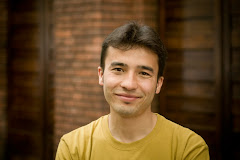
Having fled from death threats in his own country, Amin Wahidi, the exiled young Afghan filmmaker in Milan Italy wants to take the initiative of introducing his country to the Italians through the films of young and independent Afghan filmmakers. He would also like to link the filmmakers of both countries through this film festival to have cultural – artistic connections and relations in the future.

While looking forward to receiving positive reactions from the readers of this open letter we are still working on the programming and planning of this small festival. Soon we will write the details of program of the festival in this blog.

Saturday, March 8, 2008

No signs of hope yet for a better Afghanistan in 2008!


No more violence!
No more killings!
No more bloodshed!
No more unforgivable crimes!
No more suicide attacks!
We want security!
We want peace!
We want justice!
We want bread!

We want the government to protect us, are the cries that come out of throats of the many children, women, boys, girls, old and young who have lost a father, a brother, a mother, a sister, son or daughter in the recent suicide blasts in Kandahar, but where are the ears to hear their wailing?

We are sorry to hear this heart breaking news, and send condolences to the families of murdered innocents in these cruel suicide attacks. We condemn these cruel and bloodstained attacks. But even more, we regret that government officials do nothing for security. And then we feel regret for the Pashtoon leaders and politicians who have been continually supporting the Taliban, and now are being burned by their pact with devil.

The second big attack that took the lives of dozens of people in Kandahar on Sunday, February 17 happened during a dog fight that is a tribal pastime, especially among the Pashtoons of the south. In addition to the dead, news footage showed destroyed police vehicles. Why were police at a dog fight? It was revealed by a journalist in NOMA Website (Civil Movement of Afghanistan)that the fight was actually conducted by the of Kandahar police, and the dogs belonged to them.

Surely the attackers knew that the dog fight was conduced by the police and there would be many police officers in the area. Therefore they planned it precisely for that day, and killed many police officers. This was not reported by the spokesperson of The Ministry of Interior in his interview with the media, because the police and the ministry’s reputation and professionalism would be questioned.

This attack once again points out the real need and necessity for strength in Afghanistan’s security sectors, including the Ministry of Defense, Interior and the National Directorate of Security (national intelligence agency). This is not the first time such of lack of professionalism has been evident. Kabul’s five-star Serena Hotel, which hosts many foreign diplomats and VIPs was also attacked in mid-January and resulted in many casualties. This attack was also skillfully planned and executed, and shows continuing empowerment of the Taliban and their terrorist adherents.

While this was an alarm for Afghan security officials, it must have also alerted NATO and coalition forces to the need for real change in their training and support of Afghan security forces. While security is the major issue in Afghanistan, Afghan leaders and politicians ignore this fact. Instead they argue with each other about other internal issues.

The efforts of Pashtoon leaders to empower the Taliban raises the question: Why are they trying to take Afghanistan towards ethnic cleansing, or the re-Pashtoonization of Afghanistan? Isn’t this the root of Afghanistan’s quarrels and backwardness for centuries?

Clearly knowing that the terrorism doesn’t have borders, or true religious basis, or logic; that it doesn’t care about ethnicity or nation, still the government’s Pashtoon leaders plan their domination of the nation’s non-Pashtoons.
These efforts are seen through:
• the escape or release of Taliban commanders from prisons
• the appointment of a Taliban leader as a district administrator in Helmand
• ignoring or even cooperating with Taliban-fostered poppy cultivation

Afghanistan officially moving towards re-Pashtoonization process?

The issue of Parwiz Kambakhsh has not been resolved, but we are witnessing another violation of freedom of speech in Afghanistan right now. This is the punishment of a journalist for using nonPashto words in his Dari report.

Some people believe that ethnic discrimination will appear again soon. The latest series of ethnic brawls began with an episode of ethnic and language discrimination against a Dari speaking radio television reporter in Balkh province, who had used a non-Pashto word in his Dari reportage. This angered the Minister of Information and Culture who fined and fired the reporter as well as two other personnel of Balkh provincial radio-television. Instead of promoting anti-culture and anti-freedom of speech action, shouldn’t the government be concentrating on bigger issues like the failure of security , government inefficiency and corruption, financial disinvestment, and re-empowerment of the Taliban?

Sunday, February 17, 2008

Amin Wahidi's latest trip back to Kabul


Part 1


Wake up, wake up Amin! Opening my eyes, I cannot believe that I am in Kabul! I see Assad holding a handycam in one hand and shaking me with the other while laughing at me and recording all the moments while I wake up. He follows me to the toilet door, then when I come out and walk towards the sink to wash my hands and face he keeps recording and keeps saying,

“Hurry up, hurry up, we’re going out to see what’s happening in Kabul today and film it. It is too late, not good to sleep this late.”

Actually I stay up very late these nights, doing a lot of work; not specific work, but reading, writing and searching in the internet, the only things I am able to do. I have a quick breakfast and then we both go out. While telling me I have put chains on the tires, he gets into the car and drives it out of the gate. Then I close the gate, jump into the front seat beside him, and he takes off. Everything is white.

“Oh it has snowed lot!” he says, and I say yes, “it is good that next year we will have more water so our people will have a good harvest. It is almighty Allah’s mercy this year that there is enough snow so we can grow wheat and grain instead poppies. ”Assad laughs, “oh don’t start again.”

Assad wants to steer the car with one hand while recording with the other but I say “no, let’s talk about what we’ll film, and then we’ll have the whole day to do it.” I take the camera from him and turn it off.

******
The roads are very slippery and the brakes don’t work well. Assad enjoys driving fast, as always, which I don’t let him do now, when it is so dangerous with so many people walking on the narrow roads of Dasht e Barchi. Some carry snow-shovels to sell. Some have bought them and shout, “Snow shoveling, snow shoveling!”

We see children playing in the snow, and throwing snow balls; some children make a snowman. What nice scenery there is when it snows; the trees are covered as if they are wearing white suits, and anything, even a small thing on the snow is visible like a black spot on a white sheet. Assad and I recorded all we saw. At my insistence, we reach Masoud’s house. He is a colleague of mine from the Ariana TV Network, and my classmate in Kabul University’s Fine Arts School. We will take him with us and head to the center of town. Oh, I forgot to introduce Assad. He is my mother’s brother; one year older than me and my best friend.

Assad parks the car on the street and records with the camera. I knock on the gate of Masoud’s house and hear a voice-- “who is it?” Soon Masoud’s young sister comes to the gate and says Masoud is still sleeping, Assad still records as we enter and go directly towards Masoud’s bedroom. I pick up a glass of water and pour some on his sleepy face. He jumps up, shouting oh! What is it? Who is this?! Then while Assad is still recording we both burst out laughing. Masoud’s sister laughs with us.

Masoud quickly gets out of bed and washes his face, and without having breakfast he joins us as planned. The three of us get into the car and while Assad drives, I take the camera and start recording. The sharp white light that snow reflects teases my eyes, and I am not wearing glasses either but still I am willing to do it. Rewinding the recorded video I ask Assad, “what have you recorded? Unprofessional! Totally unprofessional!” Masoud tells me, ok, now you record professionally.

I try not to keep recording everything like Assad did, and my eyes look for something special-- special images that give me and the others a sense, a meaning, and a feeling!

I begin to see new and more serious images through the view finder. Sometimes I wish I were not a filmmaker so that I would not focus on some of the things I see around me. Here is a poor porter, pulling a cart with a heavy load of wood, dripping with sweat, and there is no one to help him out and push cart from the rear. I tell Assad to park the car on a side and they two get out to help the poor cart- puller. I keep recording the scene.

A car is parked on the other side of the road and it won’t start. According to Assad, the driver looks very jealous that we could start our car. Many people stand in the snow, waiting for a bus. A handicapped man is walking with the help of crutches in the heavy snow. On the other side of the road, I tell Assad to drive more slowly, so that I can tape all that I see. Masoud keeps shouting, oh look at that! Look here! Look there! He just confuses me and I am not sure what really I have to record from this big world with this small handycam.

Further along, we see a crowd. A big truck is parked on the other side of the road where there is a little more space. Many people surround it, and while they make a lot of noise, we are not sure what they are talking about. We see men pulling sacks out of the truck and others taking them with wheelbarrows. The snow is black and the people carrying the sacks are dirty. Oh, now we realize that it is coal for heating, and people are buying it, as we ourselves used to do.

We record these moments, then move on slowly. We see a middle-aged woman carrying a basket on her head full of loaves of Naan e Garm (the hot Afghan bread) which leaves a delicious smell in the air.


Part 2
As we reach Chauk e Shahed Mazari (Shahed Mazari Square) in Pol e Sokhta, we see there are more crowds; we see beggars coming up to the cars, asking for money.

Bicycles and Zaranj Rickshaws pass by and traffic jams the square. On one side there are carts parked and selling fruit and vegetables. On the other side, where the bus stops for Dasht e Barchi, we see people selling things from small stools: bananas, shor nakhod (Special Afghan peas), garam lablabo (hot beets) and peanuts. It is noisy as car and bus horns sound. We see a group of boys walking and two of them fall down slipping on banana peels, every one laughs at them.

As we move towards Kot e Sangi, our ears still hear the voices of vendors and fruit sellers yelling: ( Ala Garam, garam shor nakhod, alla kella bobaren kella! Khal dar kella! Maza dar kella! Lablabo! Garm o dagh, sherin o shaker lablabo bobarin ke khalas shod)…

We cross Pol e Sokhta and see the new additional bridge, that has been under construction for almost a year, is still not completed. We are now between Golaye Dawakhana and Kote Sangi where we see other crowds of people. There are many hotels, restaurants, and dormitories in this area for the people who come from or who want to go towards Hazarajat.

People sit near the hotel doors and some walk around the hotels and restaurants but none seem to understand it’s winter, since they are not wearing warm jackets, coats or hats. I wonder why. I tell Assad to park the car so we can go film these strangely dressed people. We get out of the car and move toward them. Assad says “Salam qauma!” the traditional greeting.

“Walekom Salam,”one of them answers, and I keep recording as Masoud stands beside me watching the LCD screen of the camera. I ask the man if it is okay to film him. He smiles at first and says nothing, but he answers,

“Yes, take my picture. The others took my life. Now you take my picture. This is the only thing I can give to you, yes record me, take my picture. But show it to the world, show it to people and ask them if this is Islam and Brotherhood? Is this human care for refugees? Amadinejaad has taken my everything. Just my breath and nothing else is left for me!”

His anger confuses me and I think he might be insane or crazy but still I record.

“You see I have nothing to wear for this cold winter?” the man continues. “Do you think I am crazy? Or I am giving a fashion show with these summer clothes?” I now realized what he meant.

“We were deported by force from Iran. My family was deported, but I don’t know where they are now or if they have winter clothes, because I was at work when the Iranian police arrested and deported me. While my family members were looking for me, they were all, men and women, deported. I am not sure where they are. Record me and show it on all the channels of the world, Show it on BBC, on Tolo Television on Aljazeera!

The man continued, “Show it to Ahmadineejad, show it to the government of Iran who claim to be Muslims! Where is it written in Islam to deport refugees in the heavy snow of the cold winter?!” Hearing his voice the other deportees also come nearer and joined him.

One says,“Tell me who is responsible?”

Another says, “Yes record us and show it to Hamid Karzai, show it to Wazir e Kharija and Wazir e Mohajerin!” (Ministers of Foreign Affairs and Refugees Affairs).As it gets more crowded it is more difficult to control the small handycam and I try to get more distance between them and myself. From a further away, an old man yells, “Marg bar Ahmadinejaad!” And the others repeat it, “Marg bar Ahmadinejat! Marg bar Ahmadinejaad!”

We see women and children, also deported, also knowing nothing about their fathers and brothers, and husbands. Some children cry, some play. One women, while carrying her sleeping child, cries that the child is very sick and she doesn’t have either money or medicine. No one hears her voice, but she shows me the face of the child and tells me to record it, to show it to Masoolin e Daulati (the governmental officials) and asks,why we are like this? “If my child dies, Ahmadinejaad and Karzai are responsible,” she says.

After this last scene, I am about cry, I want to shout, I want to yell and wail, “Why are our people are like this? How long will they suffer?” I am almost losing control as Masoud takes the camera from me and Assad tells me to go towards the car. While getting into the car, we are still hear the people shouting, “Murda bad Ahmadinijad, marg bar Iran! Ahmadinejat musulamaan nest! ”

These scenes really made us sad so that we wanted to end our trip. We drove back home, wondering how we could help these people. The only thing I can do for them is to write about them, and through that, maybe others could hear their voices. This day, the three of us decide not to sleep long hours anymore, but to wake up early every morning and do lots of work because our land still needs a lot of work to be done, and we must do our share.


******
Eventually, I sigh and open my eyes, and find myself still on my bed in the room where I sleep in Milan Italy. I wondered if this was only a dream, and look around like a crazy person. I see nothing at all of what I told to you, as if every thing was blown away by the wind or I told you lies. Was it a dream, an illusion, a daydream, or a very close hearted - relationship with my dearest ones back in Afghanistan? It must be that, because I miss Assad and Masoud a lot, as I miss my other family members and friends.

So, I only imagined all these things. I was up very late the night before, reading about the heavy snows in Afghanistan, that have caused so many problems for people in rural areas. Many sick children died, because they did not have access to doctors. Also, a few days ago I heard that Afghans had been deported from Iran in the winter cold, when costs of food and heating fuel are getting higher day by day in Afghanistan. This was my latest trip to Kabul, an imaginary trip back to my Kabul.

Written by Amin Wahidi
Edited by Robert Maier


-First three photos by Fardin Waezi
-Last photo from China Press

Saturday, February 16, 2008

Statement regarding Parwiz Kambakhsh from the Afghan Cultural and Social Association in Italy

Cultural and Social Association of Afghans in Italy
Headquarters

On behalf of the Cultural and Social Association of Afghans in Italy I would like to express solidarity and closeness to Sayed Perwiz Kambakhsh, the young student journalist who was accused of blasphemy.

Convinced, as we are, of the fundamental role of information and media in the process of reconstruction and stabilization of Afghanistan, and in the social and cultural development of the country, we want to join the international community in launching appeals for reviewing the death sentence.

Though with due respect to the Afghan justice system, we reckon that the trial was not conducted in accordance with the Constitution, which provides the presence of a counsel for the defence and that the case has to be tried in open court.

Pending the review of the sentence, we moreover demand Sayed Perwiz Kambakhsh to be granted probation.

The access to quality information is fundamental to take part in the social and political life of the country, essential for the development of democracy.

Please forward

Rome, 1st February 2008


Italian Version
A
nome dell’Associazione Cluturale degli Afghani in Italia desidero esprimere vicinanza e solidarietà nei confronti di Sayed Perwiz Kambaksh, il giovane studente di giornalismo accusato di blasfemia.

Convinti del ruolo fondamentale dell’informazione e dei media nel processo di ricostruzione e stabilizzazione dell’Afghanistan, e nello sviluppo sociale e culturale del Paese, ci uniamo agli appelli della comunità internazionale per una revisione della sentenza di condanna a morte.

Pur nel rispetto del lavoro svolto della Magistratura afgana, riteniamo infatti che il processo non sia stato svolto secondo quanto previsto dalla costituzione, che prevede la presenza di un avvocato difensore e lo svolgimento del processo a porte aperte.

In attesa di una revisione della sentenza, chiediamo inoltre che a Sayed Perwiz Kambaksh venga concessa la libertà vigilata. L’accesso a un’informazione di qualità è fondamentale per partecipazione alla vita sociale e politica del apese, fondamentale per lo sviluppo della democrazia.
Con preghiera di diffusione


Roma lì 01/02/2008
Qorbanali Esmaeli
Presidente di ACAFI

Monday, January 21, 2008

Why are the Mullahs afraid?


Hearing about the illegal detention, torture, and death sentence for blasphemy of Afghan journalist Parwiz Kasbakhsh by Mullahs in Mazar e Sharif of Balkh province in the north of Afghanistan, for an article discussing the treatment of women in the Holy Quran, I would like to comment.

First, why are these fundamentalists afraid of opinions, ideas, and discussions regarding religion?
A short review on the role of the Mullahs in the lives conservative Afghan society provides an answer.

Throughout the history of Afghanistan, Mullahs have proven to be a free-fed, luxury-loving and powerful people. They rule over a large illiterate, superstitious, ignorant segment of the population, and have done so for decades or even centuries.

It is obvious for almost every Afghan that Mullahs have always been the richest people. They do no hard physical labour. They misuse the wealth of people in the name of religion, the Prophet, and the Holy book.

Their power came by targeting the poorest groups, like farmers, poor labourers, and other low- income, uneducated people. These groups were satisfied just with something to eat on a daily basis-- and thanked God for that. Not knowing there were ways to achieve progress and improve their lives, they were content when the Mullah was content with them. They were also afraid of the curse of Allah, which the Mullah threatened would come, if they were disobedient to him. Their rule continued because there was no knowledge, except what the Mullah commanded, and no one dared say anything different. It is the same today.

To keep people ignorant and illiterate, the Mullahs forbid schooling. Mullahs forbid religious questions and discussion, because they are afraid of losing their power and wealth, gained from their religion, which is in reality the business of ruling over poor, illiterate and superstitious people.

During the monarchy, they discouraged people attending school by defaming the monarchical system. Later, they prohibited people attending schools by saying they were godless communist training centres. People thanked Allah that they did not become communist when they did not know the meaning of the word.

When the immigration and displacement of people from villages to towns and cities began in the late 1980s, the Mullahs tended to lose their power. In the cities, people went to schools where they had the opportunity to learn more than what the Mullahs told them. In the 1990s, in the chaos of civil war, the fighting parties were led mostly by Mullahs. Then people realized Mullahs stood for only power and wealth. They began to see the misbehaviour of Mullahs, so the mistrust and even hatred of Mullahs grew day by day. A very popular expression says: “Do what a Mullah Says but do not do what a Mullah Does!”

Now, if you ask even a young boy or a teenager about Mullahs, he can explain that a Mullah is different in reality, from what he tries to appear to be.


The new Mullaism?

This word may not exist, or better to say I made it up, after observing the situation in countries where fundamentalism is taking root again.

The recent tragedies in Pakistan, the re-empowerment of Mullaism and fundamentalism in Afghanistan, and the Mullaism in Iran show that the Mullahs are a larger force with greater purposes and bigger deals and incomes than a simple religion should have. It is unclear if they carry out their sinister plans by themselves, or if they are puppets played by others in the game of global politics. This must be considered, because Mullahs were well-used in the cold war of the 1970s- 1990s. The Americans and Saudis among others, financed them with billions of dollars in the battle against the USSR.

If you ask an Afghan what would happen if there were no fundamentalists?! The answer would be; “The world and especially Afghanistan would have been more peaceful and prosperous.

The fundamentalists have their own followers produced in Taliban Factories called Madrassas in southern Afghanistan and northeastern Pakistan. They know nothing logically about Islam, they only follow their feeding leaders blindly, because most of them belong to poor families who have only chosen Madrassas as a way to feed their desperate families.

Most intellectuals in Afghanistan believe that Islam has existed for fourteen centuries with a good reputation, but the contemporary Muslim puppets (The Taliban) have demonstrated that their Islam is not the Islam of the Holy Quran. Islam will exist with or without the fundamentalists, but how nice it will be when all fundamentalists understand the truth and reality of Islam. This is possible but it needs time and effort and much sacrifice, and only if journalists and intellectuals like brave Parwiz Kambakh continue to reveal and discuss these issues.