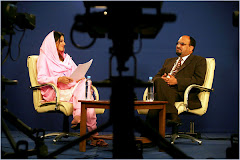
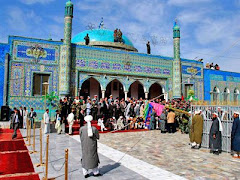
While Tolo TV continues its dispute with the Ministry of Information and Culture over the broadcast of Shakira’s concert during the Eid days, the government has arrested another journalist, this time for reprinting a Dari translation of the Holy Quran.
Dr. Ahmad Ghaus Zalmai, a famous Afghan journalist in the 1990s, and currently director of the National Union Journalists of Afghanistan, has been arrested for reprinting “Quran e Paak,” a version of the Holy Quran translated entirely from Arabic into Dari.
This Dari version was first published in the USA by a person called Bakhtiar. Before reprinting it in Afghanistan, Dr. Ghaus Zalmai discussed the project with credible religious scholars.
Since the publication “Quran e Paak” in Afghanistan this year, there have been demonstrations and objections against its publisher and editor by religious societies, mainly in Kabul. The religious scholars who have demonstrated against the publication of this book claim that it contains mistakes and misinterpretations of the Holy Quran.
Dr.Ghaus Zalmai was arrested and imprisoned after attempting to flee the country through its border with Pakistan, reports Abdul Jabbar Sabet. The arrest, carried out on the orders of the Attorney General of Afghanistan, occurred after those opposed to the book’s publication pressured the government to punish those responsible.
The question that arises here is: why is the government not at least this keen to arrest those guilty of the bombings, corruption, and human and drug trafficking that put the nation in danger? They place more pressure on the press and media activists than on those who commit such acts. Publishing the Holy Quran in Dari is not a crime. It is an excellent step toward an ideal Islamic society.
The people opposed to the Dari translation of the Holy Quran claim that the verses (Ayaat) of the Holy Quran, which are spoken by God, must be in the original language, the way they came to the world. However, the majority of Afghans who want to read the Koran are unable to read Arabic. This is why, day by day, people are becoming distant from the real Islam as written in the Holy Quran. Thus there is need for such translated versions, not only in Dari but in Pashto, Uzbeki, Balochi and all other languages so that every Afghan can use its messages in their daily lives.
About a month ago Tolo TV, which is a private television channel in Afghanistan, broadcast Shakira’s concert during Eid. Soon after the Ministry of Information and Culture put out a press release warning Tolo and all other television channels not to broadcast such shows in the future, as they are forbidden in Islam and are considered un-Islamic.
Seeing all this, we are concerned that fundamentalism is taking root again in the bureaucracy of the Afghan government, after five years of struggle against it. We are afraid as we wonder which direction our government will move: toward democracy or fundamentalism.
by Amin Wahidi
editorial assistance by Nathan Hartle
Tuesday, November 20, 2007

Tuesday, November 13, 2007
Amin Wahidi story told by noted journalist, Christopher Allbritton
Christopher Allbritton is concerned about the growing threats and violence against young Afghan journalists. Read the story here.
Thursday, November 8, 2007
Hanif Elham another targeted media activist in Afghanistan
Hanif Elham,
• Editor, writer producer for ATN ( Ariana Television Network)
• Producer/ director for the show Booye Maah ( literary and cultural program on ATN)
• Broadcast Journalist for Ariana FM 93.5 MHZ (Kabul)
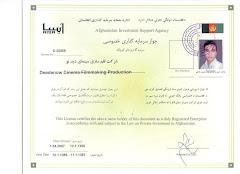
• Writer, researcher and adviser for Deedenow Cinema Production Afghansitan
• Editor in chief for the website of and a member of board of Directors of Academy of Art and Cinematic Education
Since the number of battles and suicide attacks have been increasing day by day as a result of the Taliban’s re-empowerment, life is getting more difficult for the Afghans, especially the intellectuals and the media activists.
Reports show the year 2007 has been the worst year for the security situation since the establishment of the interim government of Afghanistan.
Recently, while I have been in exile I heard that Hanif Elham a colleague of mine in ATN, Deedenow Cinema , and the Academy of Art has been threatened to death by the Taliban. Mr. Elham is a broadcast journalists who has been working day and night in Afghanistan for freedom of speech, human rights, and democracy.
Mr. Elham has been threatened and intimidated because of his popular radio program on Ariana Radio, “Imroz dar Tarikh” or in “Today in History” that presents news stories of what had occurred on the same date in previous years.
As a result of more than two years’ hard work and research, Mr. Elham has been able to collect reports that detail the destruction and killings perpetrated by the Taliban during the five years of their rule. They describe their cruelty, massacres, and hidden relationships with the other countries like Pakistan.
Mr. Elham interviewed eye-witnesses, and collected personal diaries, and newspaper clippings. He has been able to write what the Taliban did on every single day of their reign.
This remarkable effort for democracy and justice made his program unique and popular.
After a few months, in almost every house where Radio Ariana had coverage, people listened to this program each morning from 6:30 to 7:00.
As a voice for victims of human rights violations, Mr. Elham received many thoughtful and appreciative letters and calls. The program’s popularity alarmed the Taliban. They did not tolerate a voice revealing the truth about them, so they called him and threaten him with death. Mr. Elham continued, so they sent him warning letters. Mr. Elham has ignored the threats and continues his work for an unknown period of time, even though he knows it is not safe for him and his family.
Hanif Elham is sure that there is always need of sacrifice, to nourish the tree of democracy and justice in a post-conflict country like Afghanistan. Now it is our responsibility as media activists to become a voice for him and support his continuing work, which is the will of the majority.
Let us all become a strong voice that speaks about his situation to the people of the world. Let us all once again take an oath not only for Hanif Elham but everyone who stands for democracy, and does the brave work of bringing the rule of law to a country where there has been none for decades.
Undoubtedly, one of the ways to stop this intimidation, which has become a new strategy for the Taliban and the extremists of Afghanistan, is to form a strong network worldwide. It is important to reach out to the world and ask the International Community to find ways for safety and protection of journalists and media workers not only in Afghanistan but all over the world.
Let us all become one voice, condemn these threats and intimidation. Let us pray for the safety of Hanif Elham. Let us reveal the work of the Taliban and extremists around the world.
• Editor, writer producer for ATN ( Ariana Television Network)
• Producer/ director for the show Booye Maah ( literary and cultural program on ATN)
• Broadcast Journalist for Ariana FM 93.5 MHZ (Kabul)
• Writer, researcher and adviser for Deedenow Cinema Production Afghansitan
• Editor in chief for the website of and a member of board of Directors of Academy of Art and Cinematic Education
Since the number of battles and suicide attacks have been increasing day by day as a result of the Taliban’s re-empowerment, life is getting more difficult for the Afghans, especially the intellectuals and the media activists.
Reports show the year 2007 has been the worst year for the security situation since the establishment of the interim government of Afghanistan.
Recently, while I have been in exile I heard that Hanif Elham a colleague of mine in ATN, Deedenow Cinema , and the Academy of Art has been threatened to death by the Taliban. Mr. Elham is a broadcast journalists who has been working day and night in Afghanistan for freedom of speech, human rights, and democracy.
Mr. Elham has been threatened and intimidated because of his popular radio program on Ariana Radio, “Imroz dar Tarikh” or in “Today in History” that presents news stories of what had occurred on the same date in previous years.
As a result of more than two years’ hard work and research, Mr. Elham has been able to collect reports that detail the destruction and killings perpetrated by the Taliban during the five years of their rule. They describe their cruelty, massacres, and hidden relationships with the other countries like Pakistan.
Mr. Elham interviewed eye-witnesses, and collected personal diaries, and newspaper clippings. He has been able to write what the Taliban did on every single day of their reign.
This remarkable effort for democracy and justice made his program unique and popular.
After a few months, in almost every house where Radio Ariana had coverage, people listened to this program each morning from 6:30 to 7:00.
As a voice for victims of human rights violations, Mr. Elham received many thoughtful and appreciative letters and calls. The program’s popularity alarmed the Taliban. They did not tolerate a voice revealing the truth about them, so they called him and threaten him with death. Mr. Elham continued, so they sent him warning letters. Mr. Elham has ignored the threats and continues his work for an unknown period of time, even though he knows it is not safe for him and his family.
Hanif Elham is sure that there is always need of sacrifice, to nourish the tree of democracy and justice in a post-conflict country like Afghanistan. Now it is our responsibility as media activists to become a voice for him and support his continuing work, which is the will of the majority.
Let us all become a strong voice that speaks about his situation to the people of the world. Let us all once again take an oath not only for Hanif Elham but everyone who stands for democracy, and does the brave work of bringing the rule of law to a country where there has been none for decades.
Undoubtedly, one of the ways to stop this intimidation, which has become a new strategy for the Taliban and the extremists of Afghanistan, is to form a strong network worldwide. It is important to reach out to the world and ask the International Community to find ways for safety and protection of journalists and media workers not only in Afghanistan but all over the world.
Let us all become one voice, condemn these threats and intimidation. Let us pray for the safety of Hanif Elham. Let us reveal the work of the Taliban and extremists around the world.
Monday, November 5, 2007
Misuse of the death penalty in Afghanistan
Misuse of the death penalty in Afghanistan
by Amin Wahidi
Recently Afghans witnessed that fifteen human beings were executed after being tried by the judicial authorities of Afghanistan. Among those fifteen, some were accused to be murderers, some drug traffickers and some kidnappers who all faced the extreme penalty, death by hanging. This was shocking news for a young Afghanistan that practices democracy as a herald for peace, fairness and justice and for which it has the support of international community.
Since the collapse of the pro-communist government and empowerment of the Mujahedeen in 1991 there has been chaos throughout Afghanistan. The government became an Islamic state and the courts had to operate based on Sharia (the Islamic law), but there was not an appropriate court where a person could address his legal problem and find justice. Like in the jungle, the wealthiest and most powerful were the law.
As a result, when people face a serious legal problem, they do not know where to turn. They do not see that a court can solve their problem through a fair legal process.
In the chaos of the civil war, every Jihadi commander had his private court (which was his commandant station) and his guns and soldiers were the executive force and tool to enforce his decisions. Many people were jailed, tried, tortured, and even killed but there was nowhere to complain about it and no one could dare to discuss or object to it. For several years it was like this and a generation grew up with no rule of law and no justice in the country.
The point here is whether the sentence for the recently executed people was fair. Many people believe that our judicial branch, from primary to the Supreme Court are corrupt with bribery, bias, and influence by warlords.
People believe that if the government really wants to bring justice to Afghanistan, it must start the huge process of investigating and prosecuting those whose hands are contaminated by innocent people’s blood. Many people are still suspected of committing serious crimes against humanity, or of betraying the national interest. They need to face justice, but that does not happen because of their relationships with senior government officials, cabinet members, or former Jihadi leaders.
Many Taliban have committed crimes such as beating and stoning innocent or raped women. Innocent people including women were massacred, and many more crimes were committed when they were in power. But they are still free, enjoying their life as if they have done nothing wrong at all, only because they are from a particular area or particular province.
This essay is not to defend criminals who have committed serious crimes and faced the death penalty. I only ask for general for transparency in the trials of accused persons, so that in punishment there will not be discrimination.
I am concerned that there is not clarity and transparency in the trials of the criminals or people accused of a crime. When the government, acting officially or not, misuses the death penalty as a tool against political opposition, free media activists and whoever observes and criticizes misdeeds of the administration, this is a problem.
Iran and China are famous worldwide for using the death penalty of hanging for opposition or anti- government political activists in their country. Afghanistan must not join them in this.
War criminals and present and former Taliban commanders are forgiven or exempted from any kind of prosecution. They are welcomed to get their share of power in the government, but poor, petty criminals who have broken the law for reasons of poverty, hunger, unemployment or mental disorder face the extreme penalty.
The USA, the biggest supporter for Afghanistan, still has the death penalty in some States. Even there, the fairness of the death penalty is questioned by many. Most countries supporting Afghanistan (primarily European) have completely removed the death penalty.
Afghanistan should remove the death penalty and join the progressive international community, because it is so unfairly handed out as a political tool, not as punishment for crimes. But it doesn’t seem this will occur soon, since the president’s spokesperson recently announced that executions will continue in our country.
editorial assistance from Robert Maier
by Amin Wahidi
Recently Afghans witnessed that fifteen human beings were executed after being tried by the judicial authorities of Afghanistan. Among those fifteen, some were accused to be murderers, some drug traffickers and some kidnappers who all faced the extreme penalty, death by hanging. This was shocking news for a young Afghanistan that practices democracy as a herald for peace, fairness and justice and for which it has the support of international community.
Since the collapse of the pro-communist government and empowerment of the Mujahedeen in 1991 there has been chaos throughout Afghanistan. The government became an Islamic state and the courts had to operate based on Sharia (the Islamic law), but there was not an appropriate court where a person could address his legal problem and find justice. Like in the jungle, the wealthiest and most powerful were the law.
As a result, when people face a serious legal problem, they do not know where to turn. They do not see that a court can solve their problem through a fair legal process.
In the chaos of the civil war, every Jihadi commander had his private court (which was his commandant station) and his guns and soldiers were the executive force and tool to enforce his decisions. Many people were jailed, tried, tortured, and even killed but there was nowhere to complain about it and no one could dare to discuss or object to it. For several years it was like this and a generation grew up with no rule of law and no justice in the country.
The point here is whether the sentence for the recently executed people was fair. Many people believe that our judicial branch, from primary to the Supreme Court are corrupt with bribery, bias, and influence by warlords.
People believe that if the government really wants to bring justice to Afghanistan, it must start the huge process of investigating and prosecuting those whose hands are contaminated by innocent people’s blood. Many people are still suspected of committing serious crimes against humanity, or of betraying the national interest. They need to face justice, but that does not happen because of their relationships with senior government officials, cabinet members, or former Jihadi leaders.
Many Taliban have committed crimes such as beating and stoning innocent or raped women. Innocent people including women were massacred, and many more crimes were committed when they were in power. But they are still free, enjoying their life as if they have done nothing wrong at all, only because they are from a particular area or particular province.
This essay is not to defend criminals who have committed serious crimes and faced the death penalty. I only ask for general for transparency in the trials of accused persons, so that in punishment there will not be discrimination.
I am concerned that there is not clarity and transparency in the trials of the criminals or people accused of a crime. When the government, acting officially or not, misuses the death penalty as a tool against political opposition, free media activists and whoever observes and criticizes misdeeds of the administration, this is a problem.
Iran and China are famous worldwide for using the death penalty of hanging for opposition or anti- government political activists in their country. Afghanistan must not join them in this.
War criminals and present and former Taliban commanders are forgiven or exempted from any kind of prosecution. They are welcomed to get their share of power in the government, but poor, petty criminals who have broken the law for reasons of poverty, hunger, unemployment or mental disorder face the extreme penalty.
The USA, the biggest supporter for Afghanistan, still has the death penalty in some States. Even there, the fairness of the death penalty is questioned by many. Most countries supporting Afghanistan (primarily European) have completely removed the death penalty.
Afghanistan should remove the death penalty and join the progressive international community, because it is so unfairly handed out as a political tool, not as punishment for crimes. But it doesn’t seem this will occur soon, since the president’s spokesperson recently announced that executions will continue in our country.
editorial assistance from Robert Maier
Thursday, October 11, 2007
Flight of thought from Afghanistan!
After hearing about the latest security situation in my country, I wanted to write some paragraphs under this title. Two suicide bomb attacks have occurred in the same week in Kabul
I am not sure where to begin my analysis of this situation, which forces many people (especially Afghans who work for the media, cinema, and with foreign agencies and organizations) to flee the country and live, homesick, in exile.
Sometimes it really bothers us, watching day by day asAfghanistan
The human resources of this young generation are the most valuable form of wealth for countries likeAfghanistan Afghanistan
The present generation of Afghans, working in offices in various fields, are the result of study and work opportunities in other countries, near and far. It has taken at least a decade to build them, but so far the universities, and as a whole the higher education system of Afghanistan, have not been standardized and have not been able to train and graduate well-qualified and professional people to meet the demands of human resources in the country. There is still no modern and standard higher education curriculum available in all the universities.
The chapters being taught are at least 25 years old and there is rarely access to updated information on science and technology. The government did not have a specific plan for training the new generation of cadres to start work in the near future. Statistics show thatAfghanistan has a very young generation, full of work potential, that even some European countries, like Italy
If the government fails to normalize the situation by strengthening different sectors of defense and interior affairs, and stopping the threats and intimidation faced by people working in the media and foreign agencies, the flight of thoughts which has already begun will be accelerated. Not only will the government itself suffer a lack of professionals in its departments, but it will cause a lack of confidence from the international community in the Afghan government, and the flight of national and international investments from the country.
The passage of time has shown that President Karzai's administration has failed in the security sector and in building confidence.
President Karzai's administration is faced with challenges on many fronts nowadays. First, the internal governmental machinery is corrupted. Bribery is an ordinary thing in different levels of the government; the appointment of provincial governors and the chief of security police are still based on the sharing of power with former Jihadists; and the narcotics industry which feeds the Taliban has survived—it has even been increased in certain parts of the country (like Hilmand, Kandahar and Zabul) where the Taliban still have power.
Seeing all this, President Karzai's administration opens offices of amnesty and forgiveness for the Taliban. It releases the Taliban who have been captured on the battle fronts or have been arrested while perpetrating terrorist attacks, doing so based only on some ethnic relation, and giving money to them as a reward.
And now, after all the exaggeration about the Taliban by media (which I think has been a free advertisement for them by the national and local television and radio stations), they are taking advantage through several tactics and measures. They are kidnapping foreigners, kidnapping journalists, torturing and killing the people working with the foreign organizations and agencies, trying to influence journalists through intimidation, and increasing the numbers of suicide attacks in cities.
The green lights that President Karzai's administration has given to the Taliban have increased the Taliban's courage. The portrayal of these events in the national and international media shows the failure of this administration.
The Taliban are now courageous enough to challenge the government by repeating their unacceptable demand to President Karzai’s administration and the international community, which is to pull out all the foreign peacekeeping troops immediately fromAfghanistan
As a result they have shown a red light to answer the green light of the government, and have demonstrated that they are still powerful and can challenge the government at any time.
The two recent suicide bomb attacks that took place inKabul
I am not sure where to begin my analysis of this situation, which forces many people (especially Afghans who work for the media, cinema, and with foreign agencies and organizations) to flee the country and live, homesick, in exile.
Sometimes it really bothers us, watching day by day as
The human resources of this young generation are the most valuable form of wealth for countries like
The present generation of Afghans, working in offices in various fields, are the result of study and work opportunities in other countries, near and far. It has taken at least a decade to build them, but so far the universities, and as a whole the higher education system of Afghanistan, have not been standardized and have not been able to train and graduate well-qualified and professional people to meet the demands of human resources in the country. There is still no modern and standard higher education curriculum available in all the universities.
The chapters being taught are at least 25 years old and there is rarely access to updated information on science and technology. The government did not have a specific plan for training the new generation of cadres to start work in the near future. Statistics show that
If the government fails to normalize the situation by strengthening different sectors of defense and interior affairs, and stopping the threats and intimidation faced by people working in the media and foreign agencies, the flight of thoughts which has already begun will be accelerated. Not only will the government itself suffer a lack of professionals in its departments, but it will cause a lack of confidence from the international community in the Afghan government, and the flight of national and international investments from the country.
The passage of time has shown that President Karzai's administration has failed in the security sector and in building confidence.
President Karzai's administration is faced with challenges on many fronts nowadays. First, the internal governmental machinery is corrupted. Bribery is an ordinary thing in different levels of the government; the appointment of provincial governors and the chief of security police are still based on the sharing of power with former Jihadists; and the narcotics industry which feeds the Taliban has survived—it has even been increased in certain parts of the country (like Hilmand, Kandahar and Zabul) where the Taliban still have power.
Seeing all this, President Karzai's administration opens offices of amnesty and forgiveness for the Taliban. It releases the Taliban who have been captured on the battle fronts or have been arrested while perpetrating terrorist attacks, doing so based only on some ethnic relation, and giving money to them as a reward.
And now, after all the exaggeration about the Taliban by media (which I think has been a free advertisement for them by the national and local television and radio stations), they are taking advantage through several tactics and measures. They are kidnapping foreigners, kidnapping journalists, torturing and killing the people working with the foreign organizations and agencies, trying to influence journalists through intimidation, and increasing the numbers of suicide attacks in cities.
The green lights that President Karzai's administration has given to the Taliban have increased the Taliban's courage. The portrayal of these events in the national and international media shows the failure of this administration.
The Taliban are now courageous enough to challenge the government by repeating their unacceptable demand to President Karzai’s administration and the international community, which is to pull out all the foreign peacekeeping troops immediately from
As a result they have shown a red light to answer the green light of the government, and have demonstrated that they are still powerful and can challenge the government at any time.
The two recent suicide bomb attacks that took place in
Yours Sincerely,
Amin Wahidi
editorial assitance from Nathan Hartle
To the victims of the latest suicide attacks in Kabul
Booooom! The horrible and terrifying sound of explosion bangs you, your ears jingle and you don’t know if you are okay or not. You see crowds rushing away and there is dust and smoke going upwards into the sky. You hear ambulance sirens followed by the vehicles of police and intelligence forces. Your own mouth hangs open; you know nothing about what is happening. You once again check your body and ask yourself, am I really completely fine?
While your ears continue to jingle and you smell smoke, dust and human blood, other people run away or wail and cry. The policemen shout to the crowd to leave and spread out, and you thank God that you were safe this time. You make your way home with uncertain steps. If there is another explosion what will happen to you, will you still be safe and alive? Who knows except God?
While your ears continue to jingle and you smell smoke, dust and human blood, other people run away or wail and cry. The policemen shout to the crowd to leave and spread out, and you thank God that you were safe this time. You make your way home with uncertain steps. If there is another explosion what will happen to you, will you still be safe and alive? Who knows except God?
The images still bother you, even when you are in your bed, which should be your most comfortable and safe place. You remember the innocent women and children who had no fault and no sin, no mistake and no enmity with anyone, who were killed before your eyes just a few meters away from you. Where you could have been killed too!
You start thinking, and you think and think until the next morning arrives, but you never find a reason why these innocent people were killed or who could be responsible for this cruelty. You begin the next day with no guarantee or assurance of your safety for even a moment. How long will you live? Will another explosion hit you today? Will it hurt or kill you? God knows. This kind of life is like a house in water; at any time the flood can come and take it away and destroy it.
It is one side of the coin to be an ordinary person living in
Then you have to begin building a story about it. Day and night you write, and finally you complete your story and adapt it into a screenplay, a screenplay ready to shoot! But then you need funds and support to film your written screenplay. You look for different sources to get your film funding. You think it might be better to look for it further from home, so you decide to go oversees, to another land. You travel to a land that you have never seen before, hoping to meet some people who can help you realize your thoughts and your vision, and deliver your message to your nation.
This still would not be enough. You have to advertise your film wherever possible: in your blog, on your website, in the newspapers, with your friends, on television when you have an interview, and wherever else you can reach. Then you return to your homeland with full hands, but what you receive are curses instead of rewards!
You are faced with terror, with intimidation, with the threat of death! This is the end, you think. You have lost everything: your family, your home, your people, your comfort, your wealth, your life...But in the dark, when everyone else is asleep and you are still thinking about it, you hear a voice saying: No! Never give up! This is not the end; indeed this is the beginning of a new stage of life, a new way of living. Just keep going and going, you will obtain what you want and achieve your goals.
You are confused. Who could have told you all this? Maybe God? No! You are not a prophet, that God tells you things. Maybe it was an angel, or maybe it was your heart. But it doesn’t matter at all, because you will begin your next day full of hopes and you will take your steps more firmly. Tomorrow is brighter than today, because by then the blind-minded suicide bombers will be regretful of the wrong way they have followed and will feel the fire of hell.
Sunday, October 7, 2007
"Treasure in the Ruins" screening at Milano Film Festival
"Treasure in the Ruins" was screened in the 12th edition of the Milano Film Festival, held from Sept. 14 to 23, 2007 in
When arrived at the Milano Film Festival on Sept. 14, the festival had already set its screening schedule weeks beforehand.
Fortunately, being a hopeful young filmmaker Wahidi was well received by the director of the festival, Mr. Beniamino Saibene, and his staff. He spent two days in the festival directors' house. Finally, his film was picked for an Aug. 16 screening in the Stranglehold Room of Milan’s Parco Sempione.
Called the Salon des Refuses, this screening area is set aside for the festival’s non-competition and late-arriving films. This part of the festival is an important platform, being within reach of unknown and underground directors.
Screening both short and feature films, the Milano Film Festival is smaller than the Venice International Film Festival in size, but is much more interesting and useful for young, lesser-known filmmakers. This year the festival was accompanied by musical performances.
Another interesting thing about the Milano Film Festival is the participation of many volunteers from different countries as helpers and facilitators. This distinguishes the Milano festival from the other ones in
Deedenow Cinema is keen to take part in future editions of this film festival by volunteering in some of the activities and sending their films (on time) to the festival.
Subscribe to:
Posts (Atom)